

EOA Management Committee
All members of the EOA Management Committee are elected members.
Executive members:
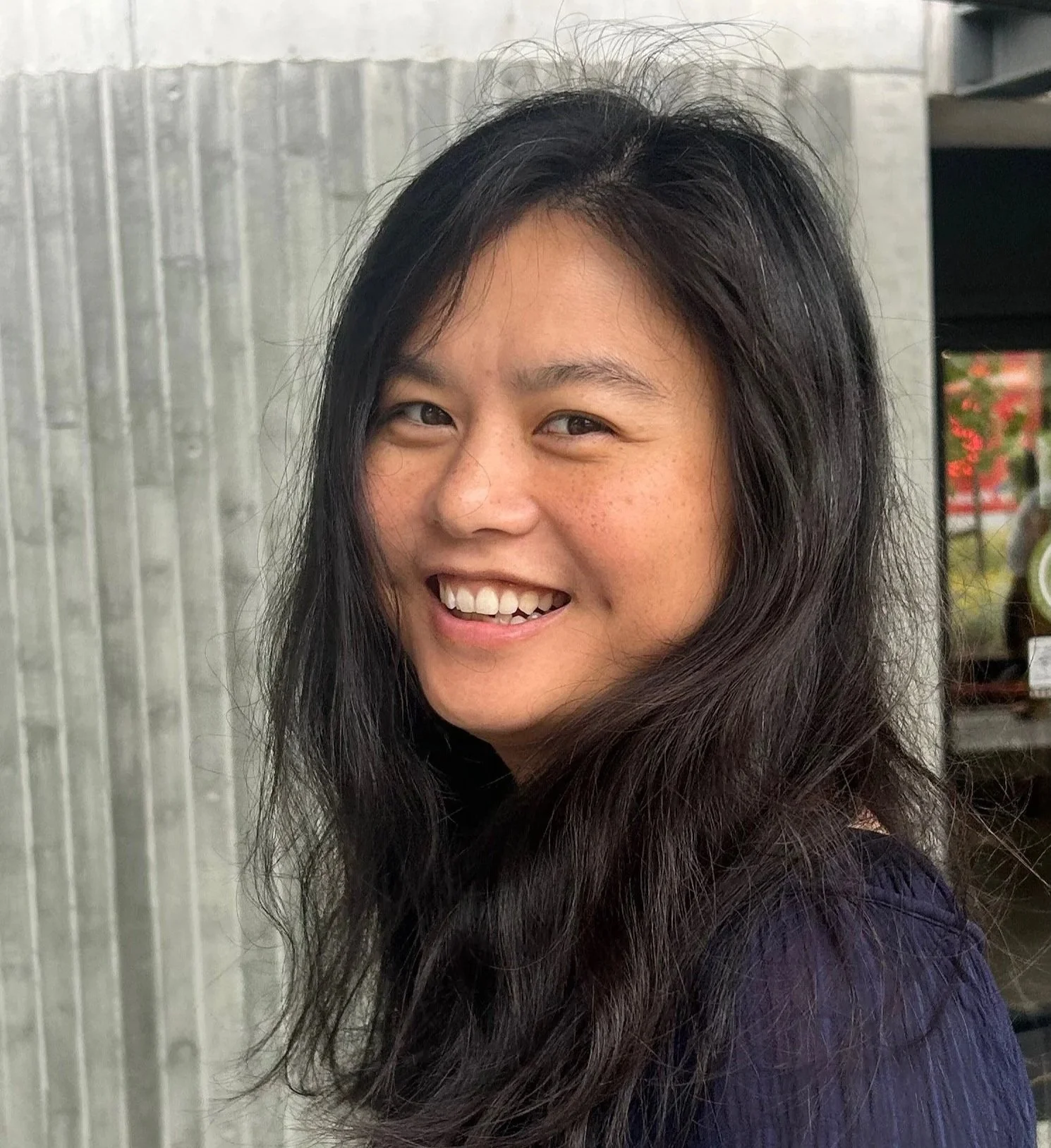

President
Dr Fang Yuan
Consultant
Fang brings deep technical expertise and broad cross-sector experience to her role as President of Earth Observation Australia. With a PhD in Physics and two decades of experience across astrophysics and Earth observation, she works at the intersection of science, technology, and real-world impact. Her experience in Earth observation spans natural resource management, environmental monitoring, climate risk assessment, disaster management, and water and food security across continental, regional, and local scales, working closely with government, research, and industry partners.
During her time on the EOA Management Committee, Fang launched the Careers and Capability Network and helped connect the Australian and international remote sensing communities through conferences and events. As President, she is committed to ensuring Earth Observation Australia serves as a clear and unifying voice for the EO community, strengthening national capability and advancing impact toward a more sustainable future.


Vice-President
Prof Bradley Evans
University of New England
Bradley is an Earth observation and remote sensing specialist who has worked on projects associated with NASA’s OCO2 Mission, Australia’s Terrestrial Ecosystem Research Network, Ecosystem Modelling and Scaling Infrastructure and the Australian Government Department of Defence where he served on the AquaWatch and other committees related to EO. As a Chief Investigator of the Australian Research Council Training Centre on CubeSats, UAV’s and Their Applications, Bradley has led the development of an OpenSource Hyperspectral Imaging Spectrometer, OpenHSI (https://openhsi.github.io/), together with his students and CUAVA postdocs and in collaboration with PI Bachmann from Rochester Institute of Technology. Now at The University of New England, Bradley established the Earth Observation Laboratory with a special focus on water and wildlife habitat and riverine water quality in NSW. He is a contributor to NASA JPL’s Surface Biology Geology mission community group, who have funding for future Hyperspectral satellites and has a positive collaborative relationship with HyVista and Yamaha SkyTeam.


Secretary
Debbie Chamberlain
Debbie is a dedicated Earth observation researcher with a PhD from the University of Queensland's School of the Environment, focusing on remote sensing of coastal vegetation communities in Central Queensland. Debbie’s postdoctoral work with the Reef Catchment Science Partnership involved collaborating with the Department of Environment, Science and Innovation on spectral distance analysis for improved ground cover estimation using Landsat time-series data. Additionally, she contributed to the Earth Observation Research Centre’s (previously the Remote Sensing Centre) efforts in analysing field transect data for vegetation monitoring in Queensland.
Debbie is passionate about serving on the EOA Management Committee to advance the critical role of Earth observation in environmental understanding and management. As Secretary, she aims to foster collaboration between researchers, government agencies, and industry, advocating for increased use of Earth observation data in policy and management.

Treasurer
Alex Leith
Auspatious
Alex has been working in the Earth observation space for the last 5 years and has relationships with other EO professionals from across the world. His work at Digital Earth Australia and Africa has delivered significant impact to people through making EO data more easily accessible. Alex has supported the community around the Open Data Cube, including getting it recognised as an OSGeo Community project. Alex's work now includes the Digital Earth Pacific program, empowering people across the Pacific to more easily access EO data.
Non-executive members:

Lavender (Qingxiang) Liu
Ecocene
Lavender is a Principal Remote Sensing Analyst who is passionate about leveraging Earth observation (EO) to support environmental sustainability and evidence-based decision-making. With a Bachelor’s degree in Surveying and Mapping and a PhD in Remote Sensing, she applies EO data and analytics across diverse domains including ecosystem assessment, agricultural monitoring, and mine rehabilitation. Over the past few years, she has been technical lead and contributor on multiple projects in collaboration with industry partners and government agencies.
Beyond her professional work, she actively engages with the EO community through conferences, webinars, and workshops, sharing knowledge and fostering connections. She strongly believes that Australia’s EO capability depends not only on technological innovation but also on open communication and collaboration—linking researchers, industry, and government through shared data, standards, and learning opportunities.
She sees Earth Observation Australia (EOA) as a vital platform for uniting our community and advancing how we collectively address national and global challenges through EO. She is thrilled to be joining the EOA Management Committee and excited to contribute her experience, networks, and commitment to strengthening collaboration, inclusivity, and knowledge exchange within the EO sector.

Fabrice Marre
SmartSat CRC
His Earth Observation journey began around age 6, watching his dad build his own weather satellite receiving station in their backyard. While his primary contribution was likely just handing him the wrong tools, seeing those noisy signals transform into incredible images of our planet ignited a lifelong passion.
For over 20 years, he has translated that fascination into a career that spans the entire EO value-chain, from ground-based sensors to airborne and spaceborne platforms. He has had the privilege of working across the full product development lifecycle, from driving national EO research portfolios and satellite mission (Kanyini) to leading AI-driven product innovation and commercialisation. This commitment to practical impact also extends to his volunteer leadership on global education programs with Earthwatchers for DeforestACTION, where he applied satellite and drone technology in the field to support grassroots conservation efforts in Borneo.
As a regular public speaker at space and geospatial conferences, his core interest is communication. He believe the greatest challenge—and opportunity—lies in bridging the gap between brilliant technical research and its real-world application. He is passionate about translating our powerful technology into accessible, valuable solutions that can solve tangible problems.
His goal is to help champion Australian EO innovation, foster stronger collaborations between researchers and industry, and work to clearly communicate the incredible, and often hidden, value our work brings to the world to a much wider audience.

Terri Freemantle
NGIS
Terri is passionate about leveraging Earth Observation (EO) to create impactful, community-driven solutions, particularly within the downstream EO sector.
Her career began in the UK, working in both industry and the non-profit sector, where she collaborated with humanitarian, government and small-business partners both nationally and internationally, to deliver EO-based solutions for disaster and humanitarian response, environmental monitoring, and sustainable development. These projects required coordinating complex partnerships across sectors and taught me the importance of inclusive, evidence-based decision-making in shaping effective policy.
Since relocating to Australia, she has focused on applying EO to regional challenges in Queensland and across the country. As a Senior Earth Observation Consultant, she currently leads statewide Planet imagery programs for the Queensland and NSW Governments, as part of a Partnership between Planet and NGIS, supporting data integration, stakeholder engagement and capacity development that builds institutional capability, community resilience, and operational uptake across civil government.
With the rapid emergence of generative AI and geospatial foundation models, she is committed to helping Australia’s EO community adapt to this evolving landscape in a way that benefits society broadly. She is passionate about science communication—recognising that EO can tell powerful stories that connect science, policy, and the public—and advocate for ethical, transparent use of satellite imagery in media and global discourse.
She contributes strategic insight, cross-sector experience, and a collaborative mindset to strengthen EOA’s mission of making EO accessible, responsible, and impactful for all Australians.
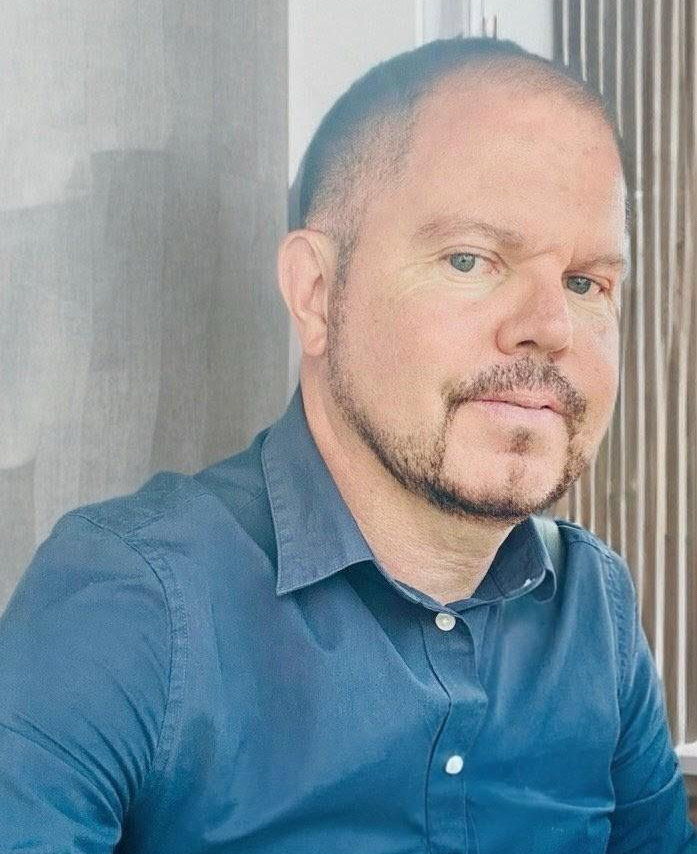

Stuart Whitman
Consultant
During his tenure as CEO of EOA, he expanded EOA’s visibility and influence across government, academia, and industry by fostering university support for establishing a formal Australian University EO Network, launching the State of EO Roundtable series to identify state and territory priorities, opening collaboration opportunities with EO colleagues in Japan and the Pacific, and supporting the renewal of the EOA Careers and Capabilities program.
Stuart’s leadership experience across the university and government sectors enabled him to engage deeply with Australian universities teaching and researching EO across diverse disciplines. This engagement highlighted the higher-education sector’s potential to anchor EOA’s future by linking EO research, innovation, and skills development with national priorities and workforce needs. Universities consistently expressed a desire for greater coordination between EO-focused institutions as a unified voice to government and industry.
As government funding remains constrained, EOA has necessarily returned to its volunteer-led roots. With strong foundations and a clear strategic program already in place, we can still advance key goals: consolidating university partnerships, amplifying advocacy, and connecting Australia’s EO community with renewed momentum. His goals are to ensure EO education and research remain central to EOA’s national agenda.

Carsten Laukamp
CSIRO
Carsten is a Principal Research Scientist with CSIRO Mineral Resources, overseeing a portfolio of collaborative research projects with government agencies and industry. His work aims to evaluate remote and proximal sensing technologies for critical metals exploration and resource characterization. Carsten’s research spans from studying the physicochemistry underlying mineral and vegetation spectral signatures to ML-assisted modelling of geochemical and petrophysical parameters, and integration of optical and geophysical Earth observation. He is a co-lead of IEEE’s Working Group on Spectroscopic Sensing of Earth Materials of the Geoscience Spaceborne Imaging Spectroscopy Technical Committee (GSIS TC) and a member of advisory boards for EU-funded projects on multi-scale Earth observation (e.g. hyperspectral, LIDAR).


George Dyke
Symbios
George has been involved in the Earth observation community since the mid-2000s, working at Symbios (symbios.space) with international space agencies such as JAXA, ESA, NASA, and USGS on their international program coordination. He has also worked domestically with CSIRO, Geoscience Australia, and the Bureau of Meteorology, supporting national Earth observation coordination efforts. Symbios is a co-author of the Earth Observation Handbook (eohandbook.com), the creator of the CEOS Database (database.eohandbook.com), and the content manager of the EO Portal (eoportal.org). He studied Mathematics and Mechanical Engineering at Queen’s University in Canada and am an Adjunct Faculty member at the International Space University.

Gordon Sumerling
Esri
Gordon is Principal Consultant, Imagery and Remote Sensing at Esri Australia. He leads a team of dedicated imagery specialists, delivering modern imagery solutions to the Esri / ArcGIS customer users. In this role he is involved in promoting Imagery and Remote Sensing techniques from capture with Drone, Aerial and Satellites, managing and serving imagery as web service, through to extracting insights with Image Analytics and AI techniques. At EOA, he is keen to promote awareness and understanding of all aspects of the image lifecycle in Education, Government and Industry by demystifying image analytics and democratising large imagery archives.
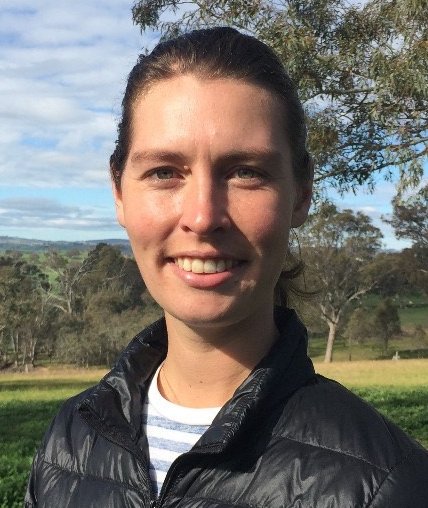
Savannah McGuirk
Remote Water Analytics
Savannah is an Earth observation specialist with broad expertise spanning the sustainable land management, agtech, earth and environmental science sectors. She has a PhD in soil organic carbon and soil moisture remote sensing and have proposed improved algorithms and methodologies for soil carbon and moisture modelling. Motivated by a deep passion for climate change mitigation and improving the resilience of Australia’s agricultural and natural resource sectors, Savannah founded Remote Water Analytics (RWA). RWA leverages Earth observation (EO) data to provide land managers and farmers with actionable spatial insights which optimise resource use, prevent soil erosion and enhance pasture productivity.
Immediate Past President:

Sebastian Robertson
Birdi
In 2016, Sebastian established Birdi and is the current CEO. Birdi is an aerial intelligence platform, offering an end-to-end solution by harnessing drone technology for data capture, visualization, and insights. With operations spanning more than 50 countries, Birdi's transformative impact is evident, with a community of over 3,000 drone operators contributing to its success. It is focused on increasing Australia's trajectory in aviation and Earth observational data insights, and remains committed to supporting enterprises to further engage with the Earth observation community.
Prior to Birdi, Sebastian established Batyr, a prominent charity dedicated to delivering mental health initiatives for young Australians aged 14 to 30. He was the founding CEO for five years, and then Non-Executive Chairman of the Board for a further 8. Batyr has reached over 400,000 young individuals through its programs and grown to a team of more than 60 full-time professionals, in addition to over 150 part-time/casual staff and a dynamic network of volunteers.
Sebastian has a Bachelor of Commerce and Economics from the Australian National University (ANU) and is a Graduate of the Australian Institute of Company Directors program (GAICD). He has served as a member of the Global Nexus Mental Health Council, an Advisory Board member to Corporate Match (a philanthropic venture), and an adviser within Hatchstone VC and Trampoline Ventures.
Past Management Committee Members
Emerita Prof Megan Lewis
Dr Alex Held
Dr Anthony Rea
Barbara Harrison
Tim Whiteside
Prof Stuart Phinn
Sylvia Michael
Prof David Antoine
Dr Renee Bartolo
Prof Arnold Dekker
Joanne Edkins
Prof Alfredo Huete
A/Prof Karen Joyce
Agnes Lane
Dr Stefan Maier
Prof Graciela Metternicht
Dr Jasmine Muir
Dr Cindy Ong
Dr Amy Parker
Prof Andrew Skidmore
Ben Starkey
Dr Wendy Thompson
Dr Adam Steer
Dr Dan Wu
Lee-Anne Worrall
Caroline Poulsen
Prof Joseph Awange